The event becomes a tradition for Extra Life.

At the end of Destiny 2’s first year, my regular raid group had the idea to run all three of the Leviathan raids in one evening, as a challenge to ourselves for fun.

It was a pretty good time.

We didn’t get around to this last year, but in the last couple of weeks, what’s now grown to become Ethos (our Destiny 2 clan) started discussions around doing something similar once we’d completed Garden of Salvation. Schedules have magically aligned, and this Saturday, we run Raidapalooza 2019.

Raidapalooza 2019 will start this Saturday, November 30, at noon Central time, and will run for 12 hours maximum. Each raid will be limited to a two-hour hard cap.

It’ll be broadcast on Twitch here.

We’re raiding for a cause.

Since this will be a fairly long event, we’ll be streaming it on my Twitch channel, and hopefully raising some funds for Extra Life. I didn’t get to participate in Game Day this year, so instead, I’m running some longer streams between now and the end of the calendar year to raise those funds.

I’m hoping to raise $1,000 this year. Right now, we’re sitting at $50, and we could use your help.

There are things you can do to help, such as:

All of the proceeds from this fundraiser are forwarded to children’s hospitals in the St. Louis metropolitan area.

What are the Raids?

The first Destiny introduced the MMO concept of “raids” into the first-person shooter genre. Simply put, a Raid in Destiny is a six-player cooperative activity with higher challenge than much of the rest of the game.

Players are expected to master complex mechanics and tougher combatants than they’d experience in playing alone. They have cohesive themes and narrative importance to the Destiny experience.

As a whole, they are sharply-crafted and rewarding experiences—that many players of Destiny simply never get to see due to the six-player requirement and time necessary to learn the encounters.

As our team runs the raids, you’ll see clear and concise communication, or “calls,” throughout the experience, and witness the result of teamwork that’s been built over many attempts.

There are seven raids currently available in Destiny 2. We’ll be playing through them in release order, and limiting each raid to a maximum of two hours to ensure we can showcase as many of the raids as possible. We’re guaranteed to run at least the first six raids on Saturday, with a rotating cast of players.

Here’s what you can expect out of each raid.

Leviathan

Grow fat from strength.

Called by a mysterious invitation from the Cabal Emperor, Calus, the Guardians board his pleasure barge, Leviathan. Calus wishes to test the Guardians and their Light to see whether they are fit to serve as his Shadows: trusted operatives and elite forces.

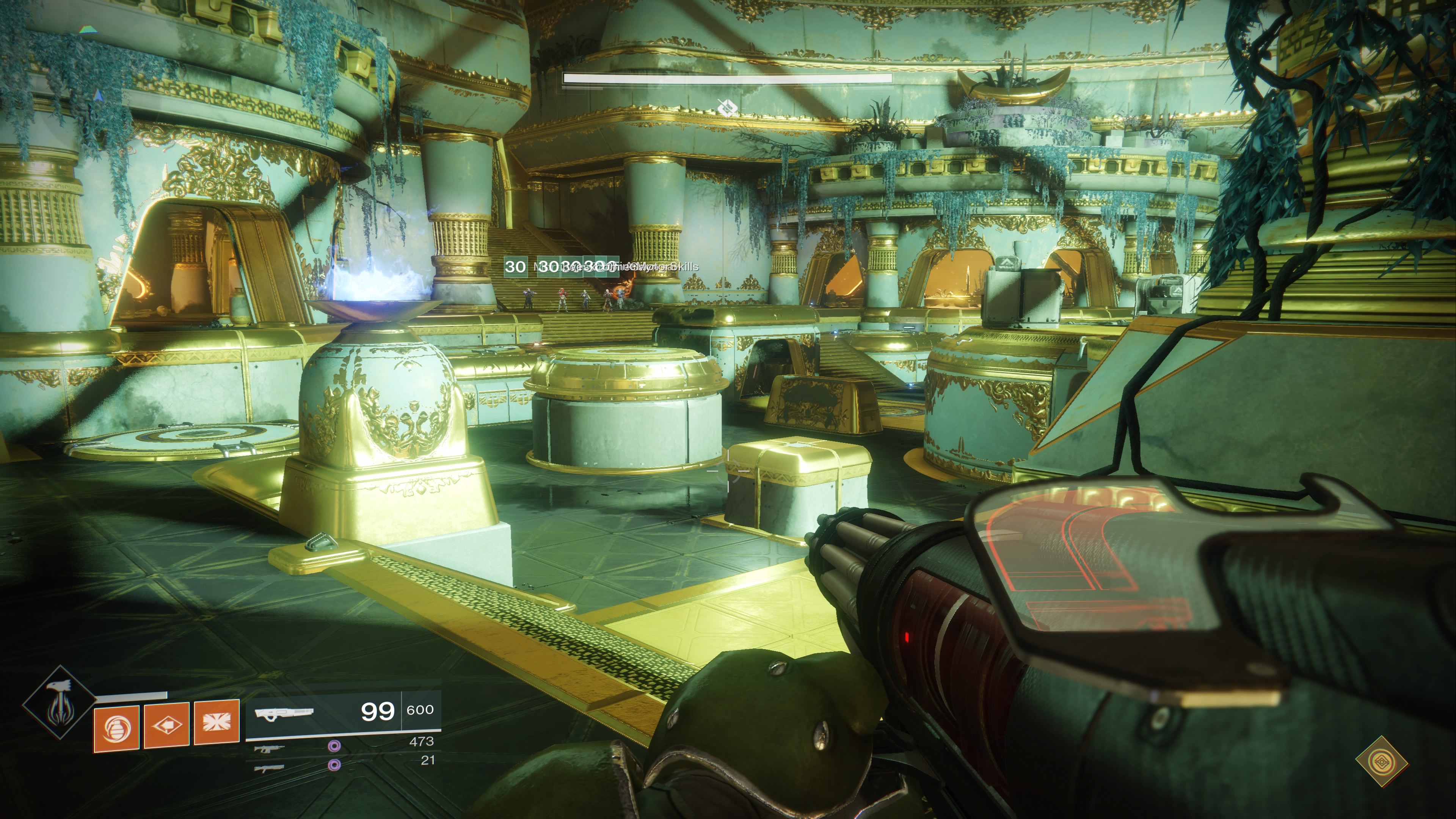
As a raid, Leviathan relies more on mechanics than on enemy difficulty. The first three encounters are selected in a weekly random order. Players will face poisoned water in the Royal Baths, be hunted by Calus’s personal war hounds in the Pleasure Gardens, and run the Gauntlet’s obstacle course before confronting the Cabal Emperor himself in the Throne Room.

Leviathan is a good showcase of clockwork raid mechanics, where each player in the group has a specific job that must be completed to prevent the entire team from losing and having to start over. The raid layout itself is non-linear, and you’ll see us taking secret passages to navigate from encounter to encounter.

The version we’ll run is the “Prestige” version, which adds mechanics to some encounters and raises enemy difficulty.

Grab your Rat King.

Eater of Worlds

In the belly of the beast.

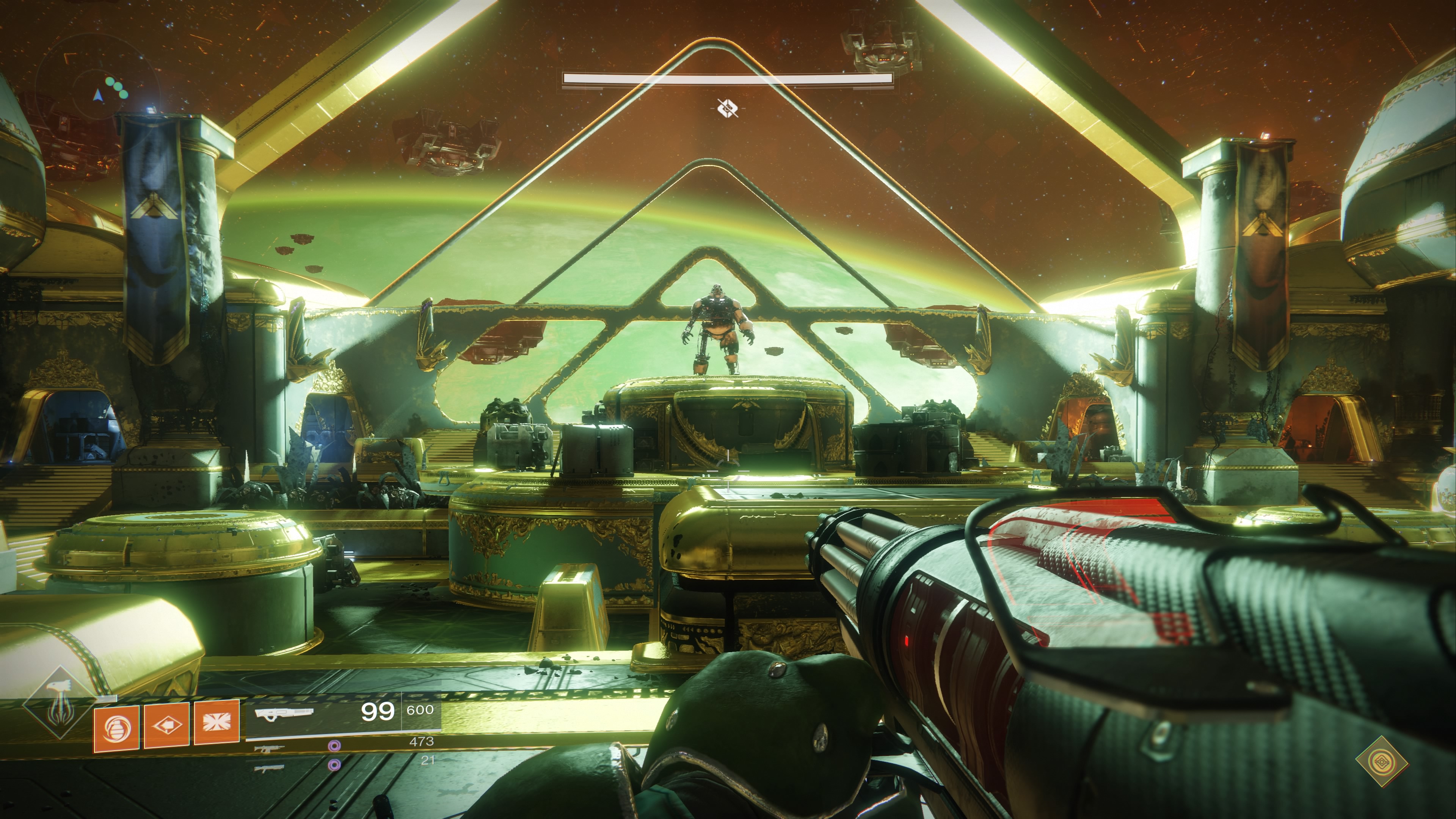
Called back to Leviathan, the Guardians answer a pest control call from Emperor Calus. As the ship slowly consumes the centaur Nessus to create royal wine for Calus’s hedonistic lifestyle, it’s encountered some trouble: a Vex Mind was nestled inside the core of Nessus, it’s been eaten by the ship, and now it’s angry.

Leviathan didn’t have more than a single real “boss fight” throughout the encounter, but Eater of Worlds is essentially a jumping puzzle followed by nothing but a boss fight.

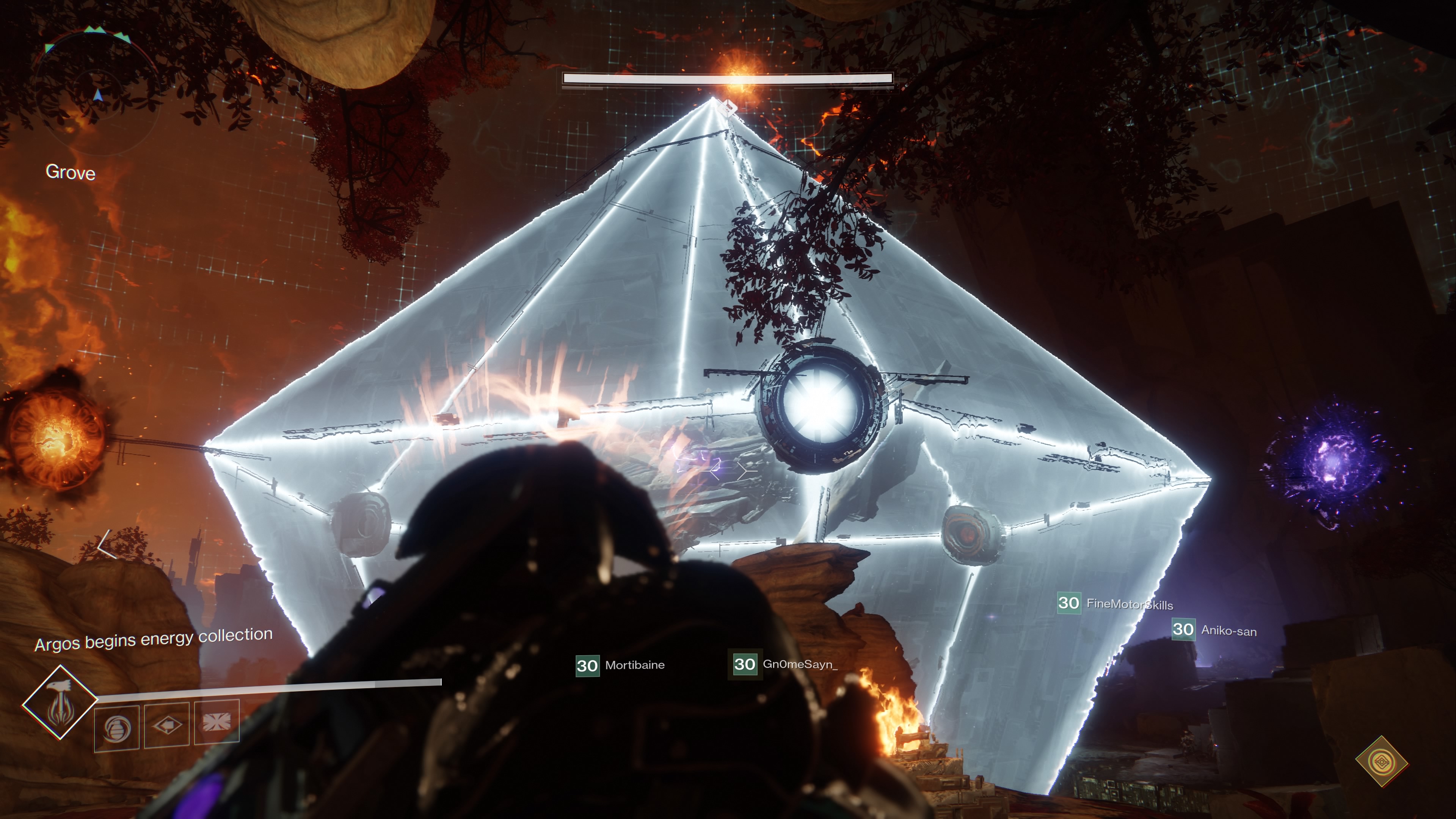
This is a shorter raid; the initial step is a jumping puzzle that requires coordination between all team members, followed by a brief onslaught. Once this is complete, the raid team is confronted by a boss with two phases: a puzzle phase to unlock the boss itself, and then the boss fight itself.

In Eater of Worlds, you’ll see fluid teamwork to deliver matched weapons to various parts of the arena, followed by a final encounter that requires quick field general work to ensure maximum damage to the boss.

Spire of Stars

On the wings of Icarus.

For the third time, the Guardians are called to Leviathan to assist Emperor Calus. The Cabal Red Legion, responsible for invading Earth and assaulting the Traveler at the beginning of the events of Destiny 2, are mounting a final assault to challenge the Cabal Emperor and threaten his position.

Spire of Stars is one of the fewer-run raids in Destiny 2, owing mostly to its combination of heavy mechanics and overwhelming enemy forces. The initial encounter is a challenge of timing and efficient enemy clearing, and it’s then followed by a jumping puzzle that requires teamwork to relay an object from tower to tower.

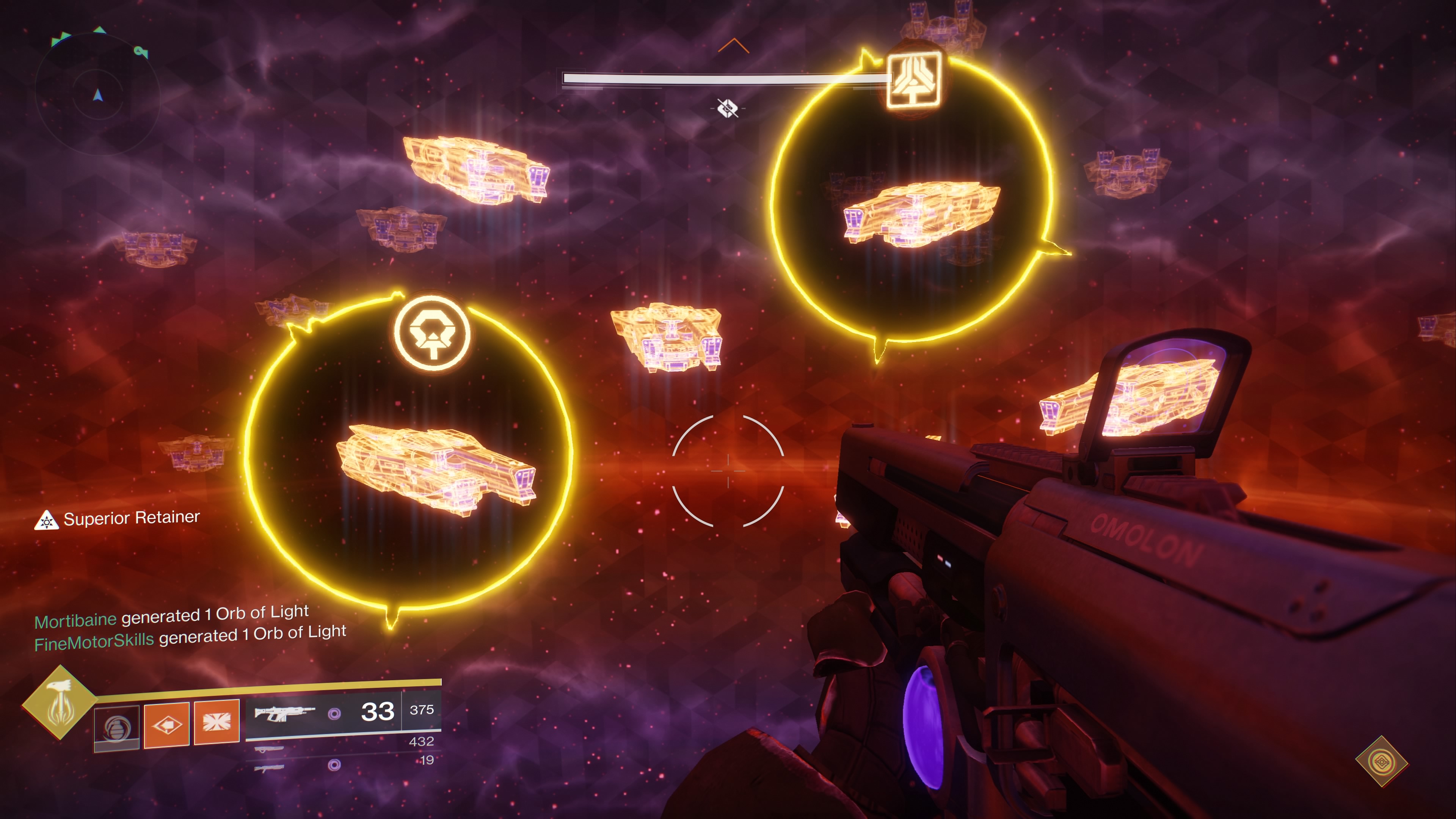
The final encounter is again in two phases, at the top of the eponymous Spire of Stars. Val Ca’uor is assaulting Leviathan itself, and both he and his warships must be dealt with. The boss encounter is a challenge that requires constant and tight communication, as well as precision when attempting to do damage to the boss himself.

Of all the raids we are running this Saturday, this is the most likely one to run into the two-hour time limit, owing mostly to a lack of recent practice at the encounters. Many of our clan members do not yet have a single completion of this raid.

Last Wish

O murderer mine.

At the heart of the Dreaming City, the home of the Awoken people, sits its greatest secret: Riven, the last known Ahamkara. Ahamkara grant wishes to those who entertain them, but at a price. And this particular Ahamkara has been Taken.

Charged by the Mara Sov, the Awoken Queen, to destroy the Heart of Riven, and thus rid the Dreaming City of a Taken curse, the Guardians enter the Keep of Voices.

Last Wish is the largest and most boss-heavy of all raids across both Destiny and Destiny 2. It ranges from a simple and unlimited-time arena boss fight, to a tightly-timed chase of another boss, to a high-damage fight and then a mechanics-based puzzle, to a complicated boss fight (that we’ll attempt to just out-damage), and then a relay race to cap the entire experience.

Its encounters are both curiously-designed and varied, and remains exciting throughout. If you want to see the greatest mix of Destiny encounter types and strategies, this is definitely the raid to watch.

Scourge of the Past

A vault, filled with the finest wares.

Siviks, Lost to None, a Fallen Captain, seeks to plunder the vast wealth of the Forges of the Black Armory and steal their secrets as his own. Ada-1, the Curator of the Black Armory, has reluctantly sought the help of the Vanguard in repelling this assault on her family’s legacy.

Scourge of the Past is our raid group’s absolute favorite to run when we have six people hanging around and a bit of time within which to complete an activity. It’s largely fun, it moves relatively quickly, and it’s generally easy to complete with a minimum of fuss.

(We’re also still trying to get the space motorcycle from the raid to drop for my son. 30 clears and counting!)

It’s also a very good example of the “introduce one mechanic first, then a different mechanic, then at the end, mash them together!” approach that makes some Destiny raids a joy to teach. It’s again some quick encounters, followed by a two-phase boss fight.

Most of the mechanics are fairly light and rely on good communication and efficient enemy clearing. Some enemies are more dangerous than others in these encounters. If you want to see a raid that becomes super-tight with repetition, this is a good one to check out.

Crown of Sorrow

Uneasy lies the head that wears a crown.

Emperor Calus’s appetite for power has ensnared one of his lieutenants in a trap. Gahlran the Sorrow-Bearer has been entrusted with an artifact of great strength: a crown that links him to the evil Hive race and grants him use of their magics. But SavathĂ»n, Witch-Queen of the Hive, has used it as a cunning trap, and a Hive infestation now threatens Leviathan. The Guardians, Calus’s Shadows, are tasked with eradicating the Hive within the ship.

Crown of Sorrow is a return to the innards of Leviathan, and provides a timing-based initial encounter, followed by another jumping puzzle (Leviathan has a lot of bottomless pits, OK?), and then a two-phase boss fight: first with Gahlran’s Deception, and then later with Gahlran himself.

The initial encounters depend more on timing and rapid enemy clearing, while the final boss fight requires sub-teams of two players to control space in tight cooperation, while rotating one-minute timers threaten to kill players throughout.

I rather enjoy this encounter; I get to form a squad with my son to complete the boss fight, which is quite enjoyable. Our timing is almost wordless in most situations at this point, and it’s amusing to find that we are coordinating with fewer and fewer words spoken each time.

If you want to see boss fights utilizing clockwork precision and heavy multitasking to accomplish the correct outcomes, you should watch.

Garden of Salvation

The heart of darkness.

The Darkness is manifest in our solar system with the discovery of a Pyramid on the Moon. Hive there are worshipping the Pyramid, and Nightmares of enemies past roam the system, threatening all. Eris Morn, Bane of the Swarm, has traced the signal from a mysterious artifact to the Black Garden, which is tended by the Vex.

This raid may or may not happen this Saturday; with the 12-hour total time limit, if other raids run longer, we won’t have the time to get into this one. For what it’s worth, our group only cleared this raid for the first time last week, after a bunch of struggling with the boss checkpoint.

If we do get into it, you’ll see some of the most amazing environmental art in the game. Garden of Salvation encounters rely on causing boss damage during specific windows of opportunity. For the first half of the raid, the team chases down the Consecrated Mind, attempting to confront it.

For the second half of the raid, we then battle the Consecrated Mind and later the Sanctified Mind, using a combination of mechanics borrowed from the Gambit game type, and positioning-based puzzles. The puzzles demand careful planning, as when you are helping with that aspect, you are unable to defend yourself from waves of enemies.

By this point, I expect we’ll be mentally tired in any case, so if you are watching, I would not necessarily expect to see a clear on Garden and instead watch us hit either the single-raid 2-hour time limit or the full activity 12-hour time limit.

And then what?

Should we actually manage to complete this marathon within the 12-hour time limit, I’m totally switching from Destiny and just hitting a few shots in Everybody’s Golf.

I have a feeling I’ll deserve it. 🙂

In any case, especially if you have read all the way to the bottom of this post, I hope you’ll stop by this weekend and watch us run some of the most entertaining content that exists in Destiny 2. We’d love to have you along for the ride, and we’d love even more if you are able to donate to Extra Life on our behalf.

See you there. Saturday, November 30, at noon Central time, on my Twitch channel.

Hey, friends!

A couple of things I love are going to join forces in a Twitch stream this upcoming Tuesday, starting around noon Central time and extending until Whenever I Feel Like Stopping:

  • With Extra Life weekend coming up in a few months, I thought it a good idea to do some early fundraising and get the ball rolling
  • Destiny 2: Forsaken launches around that time and I’ve taken some time off to play through it right away with my son, live on stream

I would love it if you would stop by and support the stream! Load it up, hang out, chat a bit, and if you feel generous, donate to my Extra Life campaign for this year. All proceeds donated via my Extra Life page go directly to local children’s hospitals and are tax-deductible.

Watch us run through the story of Destiny 2: Forsaken, experience the new Gambit game mode new to the franchise, or just stop by and chat neat-o Destiny stuff with us while we explore!

If you can’t attend directly, if you would tell your friends and families we’re doing such a thing, it would be greatly appreciated. More eyes on what we are doing means more possible donations to help sick kids in the St. Louis area.

Here are the important links for the event:

Thank you so much for your consideration!

At tomorrow’s reset, Destiny 2 players start celebrating the Solstice of Heroes event—the culmination of the first year of Destiny 2 and a send-off leading into the release of Forsaken and the start of Year Two.

Part of Solstice of Heroes includes the Moments of Triumph, which are specific bounties you can complete for your Destiny 2 account for completing various activities throughout the first year of the game. The initial Moments were made public on July 7th, but a group of them remained hidden and couldn’t be completed until Solstice starts tomorrow.

I previously revealed these hidden goals here and explained what they are and how many points towards the maximum score they would provide. But in this guide, I’d like to cover the entirety of the Moments of Triumph and what they’ll provide to you when you earn them, so you know where to focus your attention for the remaining five weeks of Season Three and Year One.

You can also read up on Bungie’s official guide to Moments of Triumph and how they will work here. The deadline for completing the Moments of Triumph is 28 August 2018.

Continue reading “Moments of Triumph Guide: Celebrating Year One of Destiny 2”

Destiny 2’s Solstice of Heroes event doesn’t start until next Tuesday, the 31st of July, but thanks to some API information that’s already been added to support the event, we can take a look at the requirements for progressing the armor set unique to the four-week-long celebration.

If you don’t yet know about Solstice of Heroes, Bungie’s post announcing the event is here.

Continue reading “Solstice of Heroes: Armor Progression Guide”

With Moments of Triumph hitting Destiny 2 this month, and lots of people looking to complete activities they haven’t yet attempted, I’m considering doing more high-level activities to teach other players how to run specific things in the game. 

Part of what I’ll be doing is working on guide posts people can read to get an overview of the activities and hopefully learn them within their own groups. But with the release of the first Lair activity, I started considering what the important aspects are for teaching these things.

These precepts are certainly not the only way to teach endgame activities (thinking specifically about raids at the moment), but the way I try to approach them.

Have patience. These activities require practice and familiarity.

When you’re running a complex and sometimes punishing encounter with players who haven’t completed it before, it can be difficult to put yourself back in the shoes of an inexperienced player.

It can occasionally feel like the rookies won’t ever understand how to complete the activity—to you, it’s very simple! After all, you’ve completed the activity a couple dozen times or better, and you have the muscle memory and encounter familiarity to execute your role without serious danger of a wipe.

Just recall the first few times you ran through a raid, before you’d been in the spaces and executed the necessary steps. Use that to guide your words. Ask players what’s going on when they miss a step or take a death. Remind them to look at the section of the death HUD that shows them what killed them and to share that information with you so you can help them.

Don’t berate players if they are having trouble. Be a positive influence on the attitude of the group.

Be mindful of the activity when you split the fireteam between new and experienced members.

Leviathan has many sections where the team is split 3/3. Eater of Worlds often has you split 2/2/2. When you make these splits or consider roles, try to group new and experienced players together. This allows for a few things:

  • Experienced players can make up for any lack of gun skill or encounter awareness.
  • Experienced players can watch the new players as they execute and help them determine what’s going wrong if there are mistakes.
  • Experienced players are better at knowing when it’s appropriate to go in for a revive if a death happens.
  • Experienced players should be flexible enough to play multiple roles within an encounter, so if you need to switch, they can do so.

When you group experienced players with new ones, you’re primarily doing so to get more information on what’s happening in the encounter, so you can change things up if you need to—either by switching roles or sometimes switching to an alternate strategy.

Explain the victory conditions first, then go back and explain the mechanics that get you there.

When you are running through encounter explanations within the encounter space, it’s really easy to get bogged down in the details and start explaining things in order. The main problem with doing this is that new players can often fail to see the forest when surrounded by really tall trees and a handful of bears.

Start by telling players what needs to be done to complete the encounter. Give them the tangible goal of the victory condition, and then explain how to get there. Go one phase at a time if you have to. If there are checkpoints, don’t be afraid to wipe after a checkpoint or take a break before explaining the next part of the encounter.

Doing this often helps players establish the mental space necessary to track various phases and can reduce surprise, especially if there’s a wrinkle happening at the end.

A great example of this is the Gauntlet in Leviathan. The victory condition is dunking nine orbs in the center. Once you establish that, it’s slightly easier for a new player to see how the phases of the encounter relate to one another. (e.g., The consequences of missing an orb during the first three rounds are easier to grasp.)

Unitask new players when possible.

If you have a choice of roles in which to put new players, you should give them a single task if possible so it’s easier for them to establish the mental space necessary for surviving the encounter and executing well. Eventually, you want all players to be comfortable with various roles, but especially for a first clear, give those new players something to do that allows them to focus their attention on one or two things at a time. Cognitive load is a real thing that takes concentration away from execution.

Good examples of these roles are:

  • Pretty much any role in Leviathan Gauntlet, though I advise steering them clear of the Psion-punching role.
  • Following the ground leader in Leviathan Gardens and taking either of the close (L1/R1) dogs in damage phase.
  • Perma-punching or throne room defense in Leviathan Calus.
  • Plate defense in Eater of Worlds Argos Phase 1.
  • Either of the inside plates in Spire of Stars boss room. (Less gun skill required to survive, and you will always be able to switch out a floater with at least one of the outside plate holders.)

If a unitasked role isn’t available, try to find positions that either start with extra help or give you a buffer. The main example I can think of on this one is the “top” plates in Leviathan Pools, as you can have the left/right float positions start there and help with taking out bathers before establishing the triangle rotation.

Teach methods that are easy to adapt for Prestige or Challenge modes later.

This one can be tough, but ideally, you want to set up players for success in later, harder, more mechanically-challenging activities. I don’t yet know what this is going to look like for the Raid Lairs in Prestige mode, as much of it will depend on the modifiers in use. (We don’t even know what two of the three of those are yet.)

Challenges in Leviathan will grant you additional loot, which is important for power leveling when the cap is increased. And Prestige modes are going to become more desirable once they have Exotic Masterwork Catalysts attached to them starting tomorrow. If you teach strategies that don’t apply easily to those more complex encounters, players will have to unlearn things before they can adapt to them. Shoot for methods that allow players to slide into Prestige by changing as few things as possible. Good examples of this include:

  • Using rotation strat in Leviathan Gauntlet. (Runners, punchers, platers.)
  • Practicing quick handoffs and quick bather kills in Leviathan Pools.
  • Using perma-puncher role in Leviathan Calus. (This teaches the throne room defenders to solo left/right.)

I don’t want to speculate too much on Eater of Worlds or Spire of Stars until I see what tomorrow looks like, but my guess is that the current optimal strats that involve point-blank damage might not be the right ones to use.

Argos will probably revolve mostly around using primarily supers for damage phase? I don’t know, but it’ll be interesting to see what it is and how it changes how people play.

Teach for understanding, not carries.

When you are running folks through these encounters, I think it best to teach the encounters like you are preparing those players to teach other people. There are a handful of encounters where you can super-simplify the mechanics to the point where one or two players don’t have to do much to complete it.

(The main example of this right now is the “run backwards” strat for Leviathan Gauntlet. I strongly believe this strat should be avoided in teaching runs.)

I’m sure a decent number of people will disagree with me on this, but I think there is a fundamental difference between a teaching run and a carry. In teaching runs, you want players to learn the mechanics in a way that they theoretically could go out and teach others in the same way. In a carry, you just want to complete the encounter with the least amount of danger (or even effort) possible on the part of the inexperienced players.

Gimmick strats and cheeses are fun to mess with when you are playing with established groups and you all know what’s going on. My regular group usually does Rat King 2-plate for Calus on Normal, for example. But I would not teach that method to a player new to the raid or encounter, as it requires fairly advanced knowledge of the workings of the encounter and tight coordination in the group itself.

(This is also why I am bearish on point-blank strats for Spire boss phase 2.)

Focus on fun first, learning second. Stop the session if the group stops having fun.

Raiding and running other endgame activities in Destiny is both challenging and fun! Once you get the encounters down, it’s a good time to run through these things with a group that knows how to rock it.

For people new to the activity, it won’t always be a fun time. It can be frustrating, demoralizing, and negative—especially if you are made to feel like you are holding the group back.

Do your best to prevent the establishment of that kind of tone in your encounters. Be positive. Compliment players on their performances. Reassure them when they make a mistake that it can be corrected and that it happens to everyone.

If you sense the mood in the group flagging, stop running the activity. There are lots of way to do this: take a water/bathroom break, move the group into a different activity (much easier when 6v6 PvP becomes standard in Quickplay tomorrow), or just call it and consider scheduling a follow-up session.

Encounter fatigue is a real thing that can lead to repeated wipes when the group hits a mental—or even physical—wall. Try to manage this as best you can.